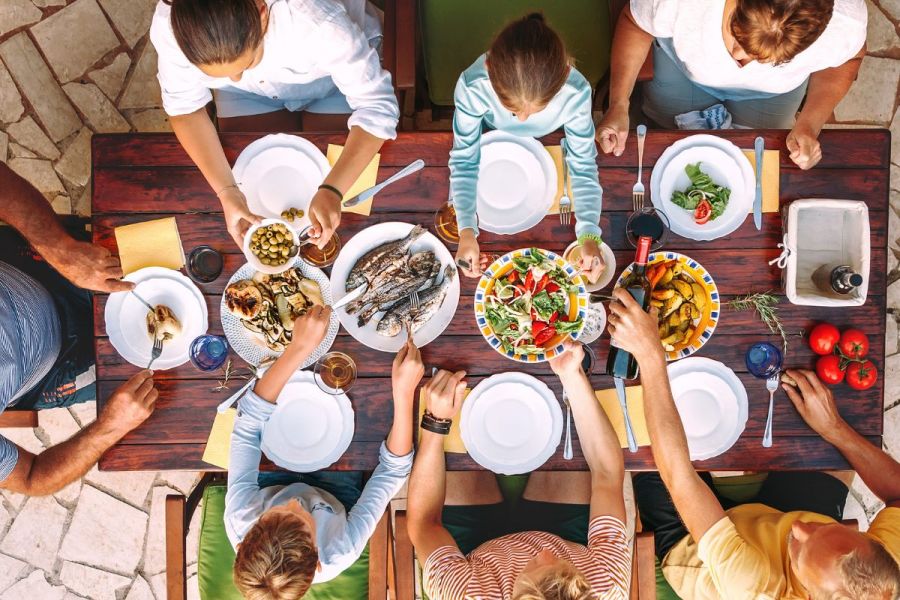
Family meals
The power of the family table nourishes bodies, minds, and relationships.
Family meals are a time-honored tradition that can have many positive benefits on children’s physical and emotional health. Research suggests that children and teenagers who regularly enjoy family meals together develop stronger bonds with their parents, experience better academic performance, and demonstrate healthier eating habits. However, despite the clear advantages of family meals, it is often difficult to make them a priority in today's busy lives.
The importance of family meals
Balanced nutrition is a key benefit of regular family meals. Children who eat meals with their families are more likely to consume higher amounts of essential nutrients, fruits and vegetables, and foods with higher nutritional value than those who do not eat together as a family. In addition, family meals tend to be lower in saturated and trans fats, as well as high-calorie snacks such as chips and candy.
Regular family meals also have an impact on children’s physical activity. Studies show that when meals are taken together, there is a higher likelihood of more physical activity outside of mealtimes. This could include playing sports or engaging in other activities as a family, helping to further promote healthy lifestyles.
Healthy weight management is another positive result of regular family meals. Kids (and parents) eat slower when they have meals with the family. This cuts down on overeating which is what we do when we are eating in a hurry between activities. Overeating is contributing to a greater incidence of childhood obesity. Children who eat with their families are also less likely to be overweight or obese due to the high nutritional value of the meals and overall lower calorie intake. This also means that children are more likely to practice healthy eating habits, as they have an opportunity to learn what healthy portions look like from their parents.
The power of family meals extends far beyond physical nourishment. Eating together gives families a chance to bond and connect, creating strong emotional ties that can benefit children's health and well-being in many ways. Regular family meals are associated with improved self-esteem, stronger relationships, and lower rates of depression and anxiety in kids. With these positive effects, prioritizing family meals is a worthwhile endeavor that can have long-lasting benefits for children's physical and mental health.
Sharing meals as a family is the single best thing we can do for our kids in terms of benefits for physical and mental health.
Regular family meals have been linked to enhanced academic performance in children. Kids who eat with their families tend to receive higher grades and test scores, as well as display better concentration and focus in the classroom. This could be due to the increased nutrition they are receiving from the family meals, but also because of the time spent together talking and developing communication skills.
Mealtime discussions help children develop essential communication and listening skills. Furthermore, regular family meals with extended family or friends offer a safe environment for children to practice socializing with adults other than their parents, helping kids to learn how to engage in conversations with different people and build relationships outside of the home.
Family meals boost contentment for adults too. We bond over food. Sharing a meal with friends or family is a source of happiness.
Family meals as bonding activities
Family meals are a great way for parents and children to strengthen their relationships. They provide an opportunity to talk and share experiences, giving parents the chance to learn more about their child's life. Eating together creates memories that will last a lifetime, as well as a sense of belonging and security.
Children who eat meals with their parents are more likely to have open and honest communication, which can also lead to fewer behavioral issues. Furthermore, when families take the time to enjoy a meal together without distractions such as TV or phones, it allows them to truly connect and understand each other on a deeper level.
Family mealtimes are an ideal opportunity for parents to instill values, traditions, and cultural practices in their children. These shared experiences can help create a strong sense of identity for children and strengthen the family bond. By teaching kids about their heritage and culture through food, parents can pass on important wisdom that will stay with them for a lifetime.
Practical tips for establishing family meals
Family meals are an important part of healthy living and should be a priority for all families. Establishing a regular family mealtime routine can be daunting, but there are several practical steps that parents can take to make it a reality.
First and foremost, try to set aside the same time each day for meals. This will help make it part of your family’s everyday routine and will be easier to stick to in the long run. If eating together on a daily basis is impossible, try to fix the days that you can.
Secong, designate one night a week as “family meal night”. This can be used for special meals or activities that the whole family can enjoy together.
Third, involve everyone in meal planning and preparation. This is a great way for parents to teach their children about nutrition, as well as instill important life skills such as cooking and kitchen safety.
Finally, make sure that meals are enjoyable by turning off phones, the TV and other distractions. Try to create an atmosphere of conversation and connection instead. Taking the time to talk with your family can help build stronger relationships and create lasting memories.
Family meals are an important part of healthy living, offering numerous physical and emotional benefits to children. Establishing a routine for regular meals can be challenging, but the rewards that come with it make it well worth the effort.
Overcoming obstacles
It can be hard to make time for family meals. Parents have busy jobs and kids have school and activities. To make sure that you eat together as a family, pick certain days of the week to set aside for family meals. That way, everyone knows when they need to be home and ready to eat together.
Another obstacle to family meals is trying to come up with healthy recipes that everyone likes. It's OK to make some of the same foods over and over (e.g., spaghetti or tacos) but it's also a good idea to switch things up now and then so that you don't get bored. Try out new recipes, or even just mix up the ingredients you use for a familiar dish. Experimenting in the kitchen can be fun and it will make family meals more interesting.
A lack of cooking skills should not be a deterrent. Simple and nutritious meals are all that is needed, not a gourmet experience. A chicken stir-fry is a quick and easy dish that can be customized with your family's favorite vegetables. It's a great way to introduce children to a variety of vegetables in a tasty way. Pasta primavera is a simple, yet nutritious dish packed with colorful vegetables. You can use whole-grain pasta for added nutrition. Homemade pizza is usually a big success. Making pizza at home can be a fun family activity. You can use whole grain crust, low-fat cheese, and a variety of vegetables as toppings. Let each family member customize their slice.
Picky eaters can be a problem, but you could take family meals as an opportunity to encourage children to try new foods and offer a variety of healthy options. Picky eaters will be more willing to try new things when they see other children eating them. You can also make meals fun by trying theme nights, like "Taco Tuesday" or "Pasta Thursday".
Don't forget to involve your kids in the meal-planning process. Ask them to help you out with deciding what to eat or have them help prepare the meals. This will not only get them interested in eating family meals, but it will also help foster their cooking skills.
Teenagers tend to rush out of the table. A way to make them stick is by preparing foods that are easy to cook but take time to eat, like shrimp cooked shell on. They are easy to cook but it takes effort and time to get the tails, yet they are delicious and worth the effort. Some parents suggest that eating by candlelight may create a sense of mystery and intimacy that encourages teenagers to stay at the table and chat.
There may be obstacles to making family meals a priority, but with a little bit of planning and creativity, you can make it happen! The benefits to your family's physical and emotional health are worth the effort.
Reclaiming the family table and the power of shared meals
Establishing family meals as a routine activity can have significant benefits on children's physical and emotional health. By making a conscious effort to prioritize family meals, parents can foster stronger relationships, promote healthy habits, and set their children up for success in various aspects of life.
Most of the happier moments in our lives center on food and family.
The goal of family meals is not perfection, but connection. So, don't stress about creating the perfect meal. Instead, focus on creating a positive mealtime atmosphere where everyone feels valued and connected. Involve your children in meal planning and preparation, make meals fun, and most importantly, use this time to engage with each other.
So, let's embrace the power of the family table. Let's nourish our children's bodies, minds, and souls. Let's build stronger, happier families, one meal at a time. Because at the end of the day, the memories we make around the family table are the ones that will last a lifetime.